

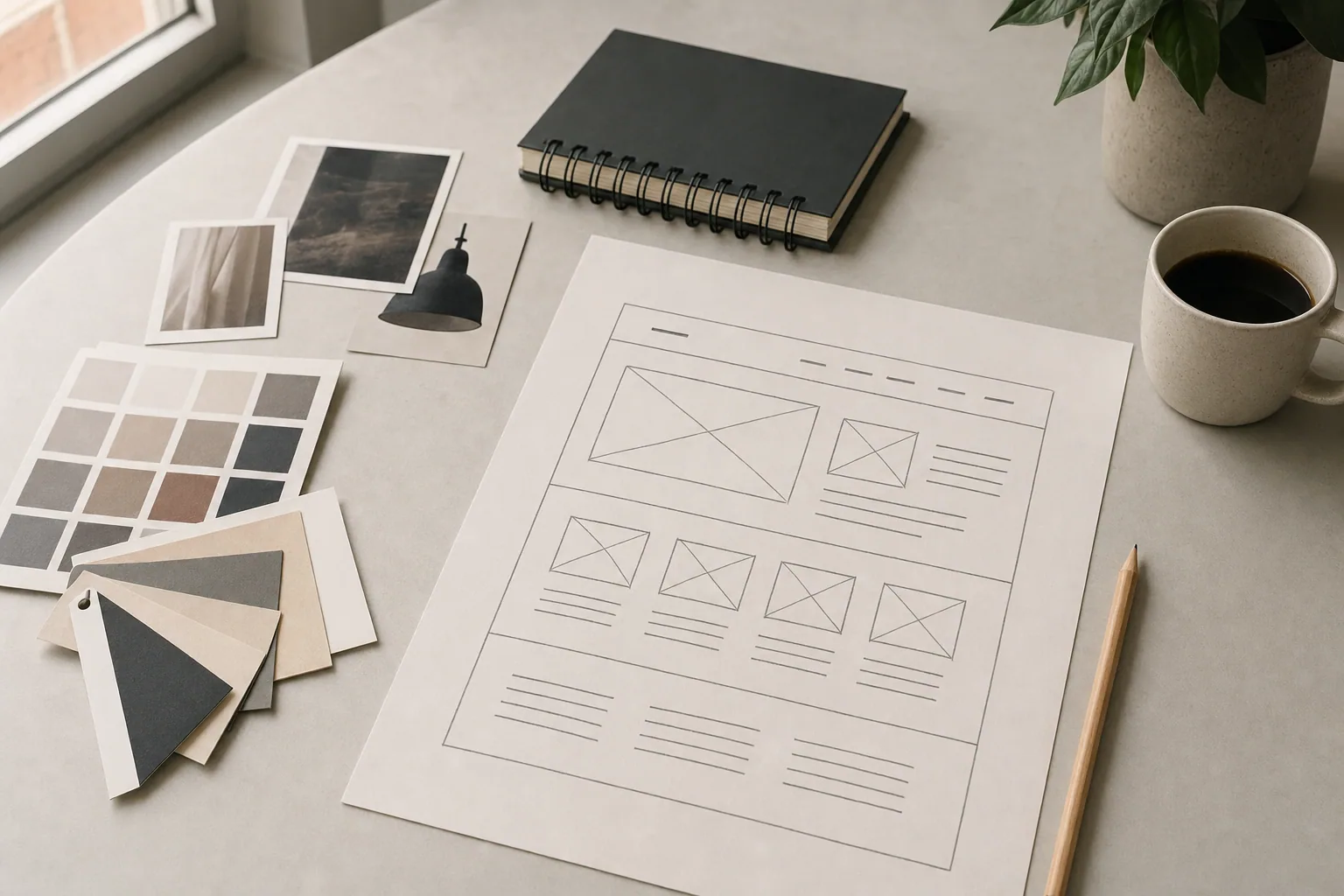
Most small business websites are not failing because they look bad. They are failing because nobody planned what the site should actually say, how the pages should connect, or what a visitor is supposed to do once they arrive.
Good website structure is not about design. It is about thinking through the business before anything gets built.
Start With the Business, Not the Template
A common mistake is picking a theme or template first, then trying to squeeze the business into whatever pages came with it. This almost always produces a site that looks finished but feels off. The services page describes the wrong things. The homepage is vague. The navigation makes sense to the person who built it but confuses everyone else.
Before you think about colors, fonts, or layouts, ask three questions:
- Who is this website for?
- What do they need to understand to trust the business?
- What should they do once they understand it?
Everything else follows from those answers.
Map the Pages You Actually Need
Most small business websites do not need twenty pages. They need the right pages, organized in a clear order.
A simple structure that works for most service businesses looks like this:
- Home - A clear explanation of what the business does, who it serves, and why it matters. Not a welcome message. A direct, honest summary.
- Services or What We Do - One page or a section per service. Each one should explain the service, who it is for, and what the outcome looks like.
- About - A short, human story about the business, the people behind it, and why they are the right choice. Not a biography. A reason to trust.
- Work or Case Studies - Proof. Real examples of what the business has done and what changed for the client.
- Contact - Simple, easy to find, with no barriers. A form, a phone number, and ideally a short note about what happens next.
Some businesses need more pages. A local trade company might need separate pages for each service area. A wellness brand might need an events page or a booking flow. A consultant might need a process page. Build what the business needs, not what the template offers.
Plan the Navigation Before Anything Else
Navigation is the first thing a visitor uses to decide if they are in the right place. If the menu is cluttered, buried, or labeled in ways that make sense only to the business owner, people leave.
Keep the main navigation simple:
- Five to six items at most
- Labels that describe what the page actually contains
- A clear call to action, usually a contact or booking button, visible at the top right
Avoid dropdown menus unless the business genuinely has a lot of distinct services. Most small businesses do not need them, and on mobile they are often difficult to use.
Also think about what happens inside each page. A long services page with no internal anchors or clear sections is hard to read. Break it into logical parts so someone scanning the page can find what they are looking for quickly.
Think About Content Before Design
Design without content is guesswork. If the words are not written before the site is built, the designer is forced to use placeholder text, and the final site almost never fits the real copy that comes later.
For each page, write down:
- The main point the page needs to make
- The questions a visitor is likely to have
- The action you want them to take when they finish reading
This does not need to be a full draft. Even rough notes give the design a real foundation to work from. Content and SEO page writing done at the planning stage, not after the site is built, almost always produces a stronger result.
Plan for Search Visibility From the Start
SEO is not something you add to a website after it is finished. It is something you build into the structure from the beginning.
That means:
- Each service should have its own page, not a single long list on one page
- Page titles and headings should describe what the business actually does and where
- Local pages, if the business serves specific neighborhoods or cities, should be written as real content, not thin filler
- The site should link logically between related pages so search engines can follow the structure
A site built with a clear page hierarchy and well-written service pages will perform better in search than a beautiful site with vague or copied content. White hat SEO planning works best when the structure is set up correctly from the start, not retrofitted after the fact.
Common Structure Mistakes Small Businesses Make
Here are some of the most frequent problems that come up when a site was built without a clear plan:
- One giant services page with everything listed in a long block of text. Hard to read, hard for search engines to index, hard for visitors to scan.
- No clear call to action on the homepage. The visitor reads the page, feels okay about the business, and then has no idea what to do next.
- An About page that is only a history lesson. Visitors want to know if the business understands their problem. Years in business and founder biographies do not answer that question on their own.
- Navigation labels that match internal jargon. Words like "Solutions," "Offerings," or "The Process" often confuse visitors who are looking for something specific.
- No visual hierarchy on the page. If every section looks the same weight, nothing stands out. The eye has no path to follow.
Build in Room to Grow
A good website structure should be easy to maintain and expand. If the backend is hard to update, new pages never get added. If the content management system requires a developer for every small change, the site goes stale.
Plan for this during the build phase, not after. Custom WordPress development built around the actual business, with a clean backend and a logical page structure, makes it much easier to add a new service, update pricing language, or publish a case study without starting over.
Start With a Clear Picture of the Business
Website structure is not a technical problem. It is a clarity problem. When the business knows what it offers, who it serves, and what it wants visitors to do, the structure becomes obvious.
If your current site feels unclear, hard to navigate, or disconnected from what the business actually does, the place to start is not with a new design. It is with a clear plan.
FultonStudio works through this process with businesses across New York City and beyond. A Site and Brand Review is a good first step if you are not sure where the gaps are or what to fix first. Reach out through the contact page to get started.